(1)教师资源
西京学院拥有一支教学经验丰富、教学技术过硬的教师队伍,70%的教师拥有海外汉语教学经验,在课程体系及教学方法方面有深刻独到的认识。
Teaching Staff
Xijing University has the teaching staff with rich teaching experience and excellent teaching skills. 70% of the teachers have overseas Chinese teaching experience, and have a profound and unique understanding of the curriculum system and teaching methods.
(2)专业资源
我校汉语国际教育专业始建于2007年,共培养毕业生600余名,现有在校生400余名。近些年来,专业与泰国曼谷部分公立中小学建立合作关系,先后选派32名汉语国际教育专业优秀学生赴泰国进行汉语教学实习;2021年以来,与柬埔寨东南亚大学建立合作关系,先后有100余名学生参加线上汉语教学项目实习;近五年来,共24名学生顺利通过中外语言交流合作中心组织的国际中文教育志愿者选拔并赴海外就业。
Major-related Resources
The major, TCSOL (Teaching Chinese to Speakers of Other Languages) was established in 2007. It has trained more than 600 graduates and currently has more than 400 students. In recent years, this major has established cooperative relations with some public primary and secondary schools in Bangkok, Thailand, and has successively sent 32 outstanding Chinese students to Thailand for Chinese teaching practice. Since 2021, it has established a cooperative relationship with the University of Southeast Asia in Cambodia, and more than 100 students have participated in the online Chinese teaching program. In the past five years, a total of 24 students have successfully passed the selection exam of international Chinese education volunteers organized by Sino-Foreign Language Exchange and Cooperation Center and gone to work overseas.
(3)特色课程
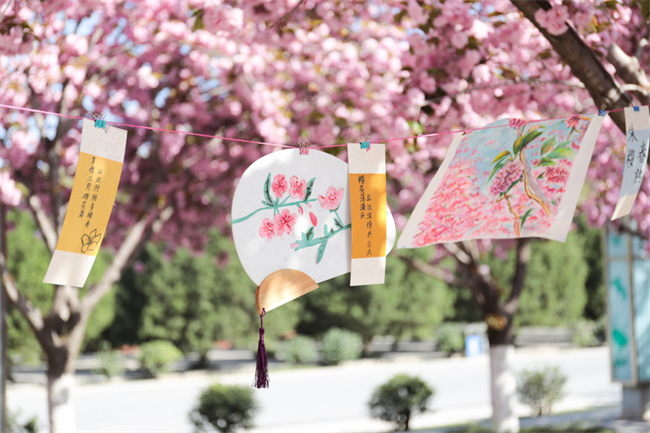
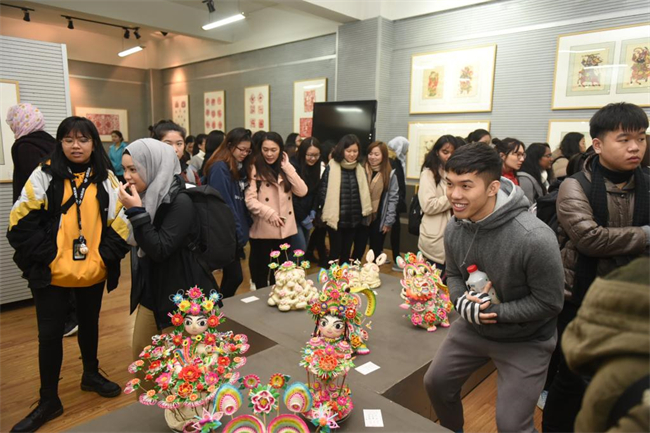
我校为留学生开设丰富多样的中国文化体验课程,利用西安独有的文化资源优势,将教学与实践相结合,既满足了留学生渴望了解中国传统文化的愿望,又可以让他们在体验课上学习一门具体的文化技艺,如剪纸、中国结、中国画等,通过亲身实践,使留学生有更多的收获。
Featured Courses
Xijing University offers a variety of Chinese cultural experience courses for international students, taking advantage of Xi'an’s unique cultural resources and combining teaching and practice, which not only satisfies the desire of international students to understand Chinese traditional culture, but also allows them to learn a specific cultural skill in the experience class, such as paper-cutting, Chinese knot, Chinese painting, etc. Through practice, international students can reap more benefits.
(4)文化旅游资源
Cultural Tourism Resources
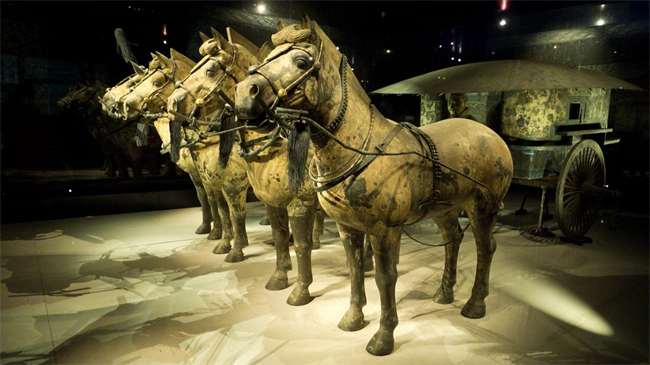
秦始皇帝陵博物院
秦始皇帝陵博物院位于陕西省西安市临潼区,是以秦始皇兵马俑博物馆为基础,以秦始皇帝陵遗址公园(丽山园)为依托的一座大型遗址博物院;也是以秦始皇帝陵及其众多陪葬坑为主体,基于考古遗址本体及其环境的保护与展示,融合了教育、科研、游览、休闲等多项功能的公共文化空间。
Emperor Qinshihuangs Mausoleum Site Park
The Mausoleum Museum of the First Emperor of Qin Dynasty is located in Lintong District, Xi'an City, Shaanxi Province. It is a large-scale agora museum based on the Terracotta Warriors and backed by Emperor Mausoleum Relic Park (Lishan Garden). The main body, based on the protection and display of the archaeological site itself and its environment, is a public cultural space that integrates multiple functions such as education, scientific research, tourism, and leisure.
西安钟鼓楼
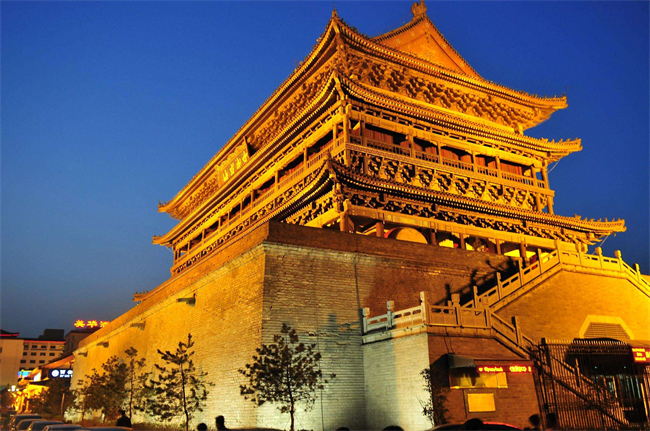
西安钟鼓楼是西安钟楼和西安鼓楼的合称,是西安的标志性建筑物,两座明代建筑遥相呼应,蔚为壮观。
西安钟楼始建于明洪武十七年(公元1384年),原建于今西大街北广济街东侧,明万历十年(公元1582年)移于现址。钟楼是一座重檐三滴水式四角攒尖顶的阁楼式建筑,面积1377.64平方米,建在用青砖、白灰砌成的方形基座上。基座下有高与宽均为6米的十字形券洞与东南西北四条大街相通。西安鼓楼始建于明洪武十三年(公元1380年),比钟楼的建造时间稍早。鼓楼建于高大的长方形台基之上,台基下辟有高和宽均为6米的南北向券洞。
Xi'an Bell & Drum Tower
Xi'an Bell and Drum Tower is the collective name of Xi'an Bell Tower and Xi'an Drum Tower. It is a landmark building in Xi'an. The two buildings of the Ming Dynasty echo each other and are magnificent. Xi'an Bell Tower was built in the 17th year of Hongwu in Ming Dynasty (1384 AD). The bell tower is a loft-style building with double eaves, three drips, four corners and spires. It covers an area of 1377.64 square meters and is built on a square base made of blue bricks and white ash. Under the pedestal, there is a cross-shaped arch hole with a height and width of 6 meters, which is connected with the four streets in all directions.Xi'an Drum Tower was built in the thirteenth year of Ming Hongwu (1380 AD), a little earlier than the Bell Tower. The Drum Tower is built on a tall rectangular platform, and under the platform is a north-south arch hole with a height and width of 6 meters.
陕西历史博物馆
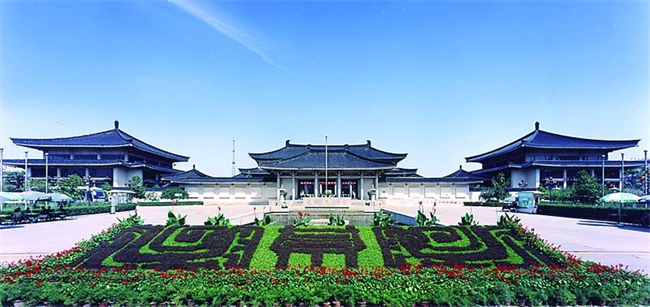
陕西历史博物馆,中国第一座大型现代化国家级博物馆,被誉为“古都明珠,华夏宝库”。馆藏文物171.795万件(组) ,其中,一级文物762件(组),国宝级文物18件(组),其中2件为首批禁止出国(境)展览文物,居中国博物馆前列。
陕西历史博物馆建筑的外观着意突出了盛唐风采,长安自古帝王都,历史上先后有周、秦、汉、隋、唐等十三个封建王朝在此建都,具有丰富的地上地下文物,形成了陕西独特的历史文化风貌。
Shaanxi History Museum
Shaanxi History Museum, China's first large-scale modern national museum, known as "Pearl of the Ancient Capitals, Valuable Collection of China". There are 1,717,950 cultural relics (groups) in the collection, including 762 first-class cultural relics (groups) and 18 national treasure-level cultural relics (groups), 2 of which are the first batch of cultural relics prohibited from going abroad (territorial), ranking the forefront of Chinese museums.
The appearance of the Shaanxi History Museum deliberately highlights the style of the prosperous Tang Dynasty. Chang'an has been an imperial capital since ancient times. In history, thirteen feudal dynasties such as Zhou, Qin, Han, Sui and Tang built their capitals here. Shaanxi has formed unique historical and cultural features with rich cultural relics.
大雁塔
大雁塔位于唐长安城晋昌坊(今陕西省西安市南)的大慈恩寺内,又名“慈恩寺塔”。唐永徽三年(652年),玄奘为保存由天竺经丝绸之路带回长安的经卷佛像主持修建了大雁塔,最初五层,后加盖至九层,再后层数和高度又有数次变更,最后固定为所看到的七层塔身,通高64.517米,底层边长25.5米。
大雁塔作为现存最早、规模最大的唐代四方楼阁式砖塔,是佛塔这种古印度佛寺的建筑形式随佛教传入中原地区,并融入华夏文化的典型物证,是凝聚了中国古代劳动人民智慧结晶的标志性建筑。
Big Wild Goose Pagoda
The Big Wild Goose Pagoda is located in the Da Ci'en Temple in Jinchangfang, Chang'an City in the Tang Dynasty (now south of Xi'an, Shaanxi Province), also known as "Ci'en Temple Pagoda". In the third year of Emperor Gaozong (652 AD), Xuan Zang presided over the construction of the Big Wild Goose Pagoda in order to preserve the Buddhist sutra and statues brought back to Chang'an via the Silk Road by Tianzhu (India nowadays). The first five floors were added to the ninth floor later, and then the number and height of the floors were changed several times. Finally, it was fixed as the seven-story tower as seen, with a total height of 64.517 meters and a bottom side length of 25.5 meters.
The Big Wild Goose Pagoda is the earliest and largest existing brick pagoda of four-sided pavilion style in Tang Dynasty. The Big Wild Goose Pagoda is a typical proof that the architectural form of the ancient Indian Buddhist temple was introduced into China with Buddhism and integrated into the Chinese culture. It is also a landmark building that embodies the wisdom of the ancient Chinese people.
大唐不夜城
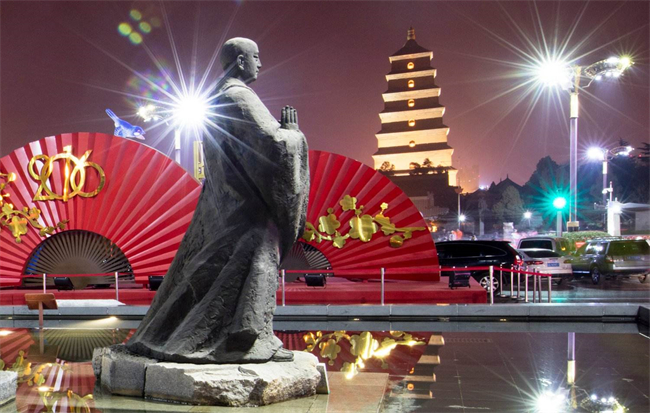
大唐不夜城位于陕西省西安市雁塔区的大雁塔脚下,北起大雁塔南广场,南至唐城墙遗址,东起慈恩东路,西至慈恩西路,街区南北长2100米,东西宽500米,总建筑面积65万平方米。 大唐不夜城以盛唐文化为背景,以唐风元素为主线,建有大雁塔北广场、玄奘广场、贞观广场、创领新时代广场四大广场,西安音乐厅、陕西大剧院、西安美术馆、曲江太平洋电影城等四大文化场馆,大唐佛文化、大唐群英谱、贞观之治、武后行从、开元盛世等五大文化雕塑,是西安唐文化展示和体验的首选之地。
Grand Tang Dynasty Ever-bright City
Grand Tang Dynasty Ever-bright City is located at the foot of the Big Wild Goose Pagoda in Yanta District, Xi'an City, Shaanxi Province, with a total construction area of 650,000 square meters. It starts from the South Square of the Big Wild Goose Pagoda in the north, and stretches to the Tang City Wall Ruins in the south, 2,100 meters long from north to south. It starts from Cien East Road in the east, and extends to Cien West Road in the west, 500 meters wide from east to west. With the Tang Dynasty culture as the background and Tang style elements as the main line, Grand Tang Dynasty Ever-bright City has four major squares: Big Wild Goose Pagoda North Square, Xuanzang Square, Zhenguan Square, and Chuangling New Times Square; it has four major cultural venues including Xi'an Concert Hall, Shaanxi Grand Theatre, Xi'an Art Museum, and Qujiang Pacific Film City; it has five major cultural sculptures, including the Buddhist culture of the Tang Dynasty, the collection of heroes in the Tang Dynasty, the rule of Zhenguan, the inspection of the Empress Wu, and the prosperous age of Kaiyuan. Therefore, Grand Tang Dynasty Ever-bright City is the first choice for the display and experience of Xi'an Tang culture.
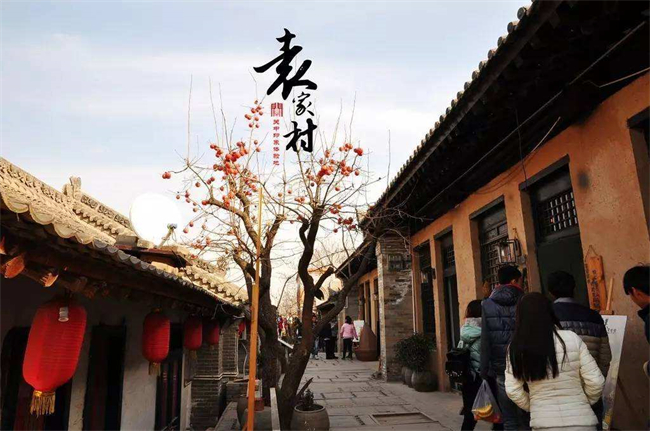
袁家村
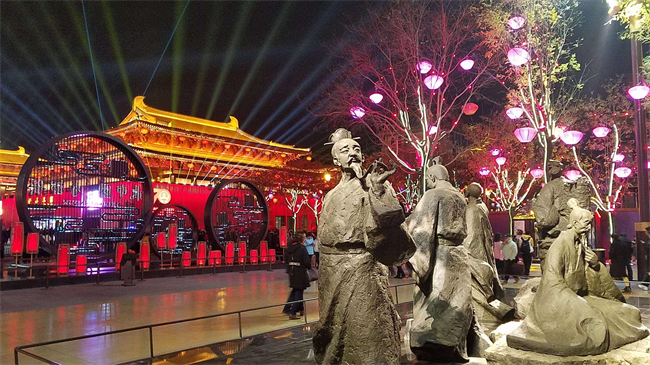
袁家村,中国传统村落,是陕西省著名的乡村旅游地之一。村落选址布局与体量凭借自然,与山水天然相容,表现出与时空的高度和谐与生活环境艺术质量的重视。房舍布局是传统的正南正北,方方正正;街巷也横平竖直,排列有序,而是顺势就势,高低错落,整齐有致。弦板腔皮影戏被列入国家级非物质文化遗产。
Yuanjia Village
Yuanjia Village, a traditional Chinese village, is one of the famous rural tourism destinations in Shaanxi Province. The location, layout and volume of the village rely on nature and are naturally compatible with the landscape, showing a high degree of harmony with time and space and emphasis on the artistic quality of the living environment. The layout of the houses is the traditional south and north direction, square and upright; the streets and alleys are also horizontal and vertical,arranged in an orderly manner. Chondboard puppet show is listed as a national intangible cultural heritage.