(1)中央大街
Central Avenue
中央大街旧称中国大街,地处哈尔滨的心脏位置,全长1450米,宽21.34米,是哈尔滨西洋风情的所在。建有欧式及仿欧式建筑71栋,并汇集了文艺复兴、巴洛克、折衷主义及现代多种风格市级保护建筑13栋,是中国国内罕见的一条建筑艺术长廊。1898年,哈尔滨开始大规模修筑铁路和城市建设,中东铁路工程局将沿江荒地拔给散居哈尔滨的中国人,至1900年即形成“中国大街”,意为中国人住的大街。俄国工程师科姆特拉肖克在1924年5月设计、监工,为中央大街铺上了花岗岩雕铸的方石,长18厘米,宽10厘米。1928年7月,中国大街正式改称“中央大街”。中央大街是哈尔滨的缩影,哈尔滨的独特建筑文化和哈尔滨人的欧式生活,都在这里明显的体现,被称为“亚洲第一街”。
Central Avenue, formerly known as China Avenue, is located in the heart of Harbin. It is 1,450 meters long and 21.34 meters wide. As the place to experience the exotic atmosphere of the Western world in Harbin, the road plays host to 71 European-style or European-imitation-style buildings, and 13 renaissance, baroque, eclectic and modern buildings listed as municipal protection. In 1898, Harbin began its large-scale railroad and city construction. The Middle East Railway Engineering Bureau allocated the wasteland along the river to the scattered Chinese in Harbin dwellers. By 1900, that area had become China Street, meaning the street where Chinese lived. The Russian engineer Komtrashok designed the Central Avenue and supervised its construction in May 1924. The street was paved with carved and cast square stones of granite, each being 18 centimeters long and 10 centimeters wide. In July 1928, China Street was officially renamed Central Avenue. Central Avenue is the epitome of Harbin. The unique architectural culture of Harbin and the European-style life of Harbin people are clearly reflected here. It is called "the first street in Asia".
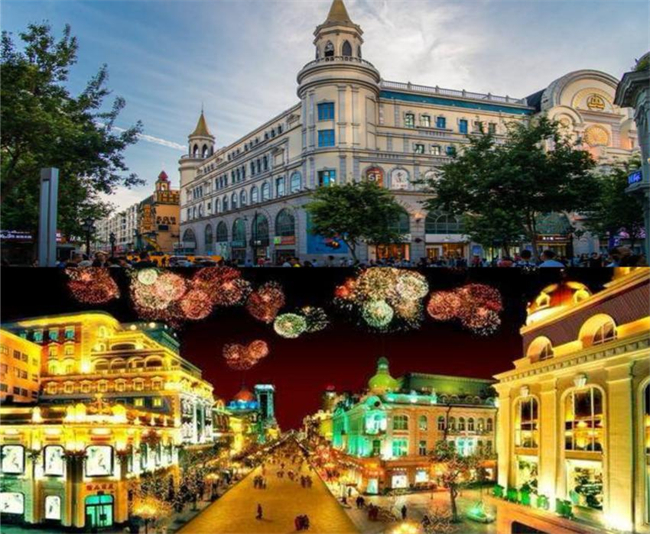
中央大街街景
View of Central Avenue
(2)圣·索菲亚教堂
St. Sophia Church
圣·索菲亚教堂为哈尔滨标志性建筑,由俄国建筑师科亚西科夫设计。始建于1907年3月,最初为沙俄东西伯利亚第四步兵师修建中东铁路时修建的一座随军教堂。1932年11月25日,教堂经过二次重建后正式落成,成为远东地区最大的东正教堂。整座教堂为庭式建筑,中央一座主体建筑有个标准的大穹窿,红碑结构,巍峨宽敞,通高53.35米,占地面积721平方米。正门顶部为钟楼,7座铜铸制的乐钟恰好是7个音符,要由训练有素的敲钟人手脚并用才能敲打出抑扬顿挫的钟声。教堂建筑平面呈希腊十字方式布置,既受拜占庭建筑风格影响,主穹顶、钟楼又有俄罗斯传统的“帐篷顶”、“洋葱头”造型。教堂构成了哈尔滨独具异国情调的人文景观和城市风情,也是沙俄入侵东北的历史见证和研究哈尔滨市近代历史的重要珍迹。
St. Sophia Church is a landmark in Harbin. It is designed by the Russian architect Koyachikov. It was built in March 1907 as a church for the Fourth Russian East Siberian Infantry Division during the construction of the Middle East Railway. Officially finished on November 25, 1932 after a second reconstruction, it became the largest Orthodox Church in the Far East. The entire church is a court-style building, with a standard vault in the center of the main building. It is of a red monument structure. Being lofty and spacious, it is 53.35 meters high with an area of 721 square meters. At the top of the main entrance is the bell tower. It has seven cast bronze musical bells, which exactly play seven notes. It takes well-trained bell ringers using both their hands and feet to ring the bell and make the intonation. The church building is arranged in a Greek cross style, but is also influenced by Byzantine architecture. The main dome and bell tower have the traditional Russian “tent roof” and “onion head” shape. The church reflects the unique exotic atmosphere and urban style of Harbin. It bears witness to the Tsarist invasion of the northeast China and is an important treasure in the study of Harbin’s modern history.
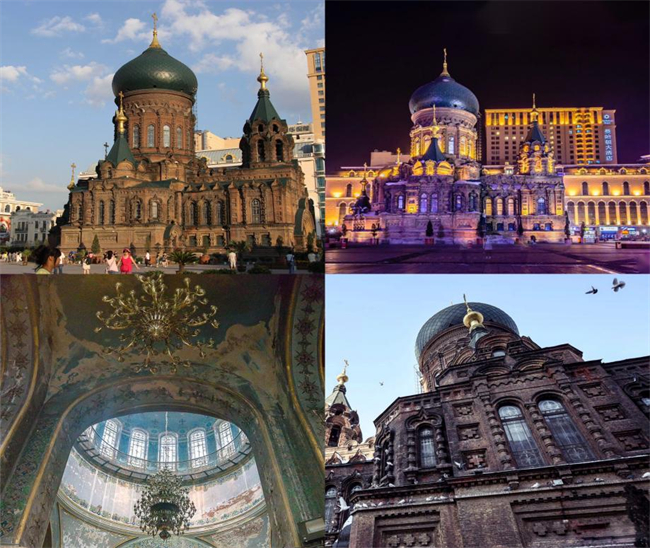
圣·索菲亚教堂内、外景
St. Sophia Church from Inside and Outside
(3)太阳岛公园
Sun Island Park
太阳岛公园是哈尔滨市面积最大的一座综合性文化休息公园,占地面积98公顷,绿地面积74公顷,水体面积5.6公顷,是国家5A级旅游景区。景区依托原有的外国风格建筑,形成了欧美园林风格,以著名书法家赵朴初书写的“太阳岛”为标志,分为游览区和疗养区两大部分,游览区共分布20多个主要景点。在太阳岛南面的松花江中有一个面积约90公顷的天然浴场,名为江心岛浴场。景区内的特色景观,构成了山湖相映,清泉飞瀑,亭桥遇在柳、荷香鱼跃的美丽景色。每年冬季,景区内会举办独具特色、形态万千、饮誉中华的雪雕游园会,以雪为主要素材,与哈尔滨音乐名城流淌的音乐相呼应,精心设计一部演绎“雪的艺术、雪的欢乐、雪的梦想”的华彩乐章。
Sun Island Park is the largest comprehensive scenic park in Harbin. It has an area of 98 hectares, 74 hectares of green space and 5.6 hectares of water area. It is a national 5A tourist attraction. On the basis of its original exotic building style, the Sun Island Park is built into European and American garden style. With the “Sun Island” written by the famous calligrapher Zhao Puchu as a symbol, it is divided into two major parts namely the scenic area and the recreation area. There are more than 20 major attractions in the scenic area. In the Songhua River, which is on the south of the Sun Island, there is a natural bathing area of about 90 hectares named Middle of the River. Island Bathing Area. The landscape in the scenic area features mountains and lakes complimenting each other. Clear springs and waterfalls, pavilions, bridges, willows lotus and leaping fish form a beautiful scenery together. Every winter, the scenic area plays host to the famous snow sculpture tour, which is unique, full of imagination and well- known in China. The tour uses snow as the main material and brings flowing music of “Art, Joy and Dream of snow” to the music city of Harbin.
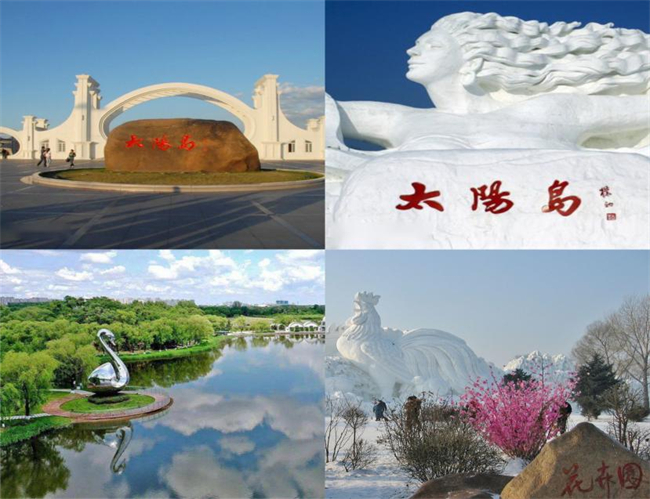
太阳岛景色
View of Sun Island Park
(4)阿城金上京历史博物馆及遗址
Jin Dynasty History Museum
金上京历史博物馆始建于1961年,占地面积50000平方米,建筑面积6800平方米,展厅面积4800平方米,是中国仅有的以金源文化为主题的专业性展馆,集中展示了金朝从建国1115年至迁都1153年间的历史沿革,经济、文化、交通等发展概况,具有鲜明的地域性、民族性和时代特征。共有馆藏文物3016件(套),一级文物28件,二级文物137件,三级文物953件。内设9个展厅,地上5个展厅,地下4个展厅。地上5个展厅,包括序言厅、金上京发展历程展厅、经济文化展厅、金源文化艺术展厅和金代铜镜专题展厅。该馆立有18米高的主万,建筑主轴与次轴交角120度,暗喻金朝120年的历史。大厅入口处的4级台阶,象征着在阿城主政的4位皇帝。
Jin Dynasty History Museum was built in 1961. It covers an area of 50,000 square meters with a construction area of 6,800 square meters and exhibition hall of 4,800 square meters. It is the only exhibition hall themed the origin of Jin Dynasty’s culture. It focuses on the history economic, culture, transportation and other development from the start of Jin Dynasty when the country was founded in 1115 to the end of the Jin Dynasty when the capital was relocated in 1153. It showcases the distinctive regional, ethnic and characteristics features of the era. It has a total of 3016 pieces of cultural relics (sets), 28 pieces of Grade One Cultural Relic, 137 pieces of Grade Two Cultural Relic, 953 pieces of Grade Three Cultural Relics. There are nine exhibition halls among which five are above-ground and four are underground. The 5 exhibition halls include the preamble hall, Jin Dynasty History development exhibition hall, economic and cultural exhibition hall, the origin of Jin Dynasty’s culture and art exhibition hall as well as the bronze mirror in Jin Dynasty theme exhibition hall. The hall has an 18-meter-high object. The main axis of the building intersects with the secondary axis at an angle of 120 degrees, which refers to the 120-year history of the Jin Dynasty. The four steps at the entrance of the hall symbolize the four ruling emperors in Acheng.
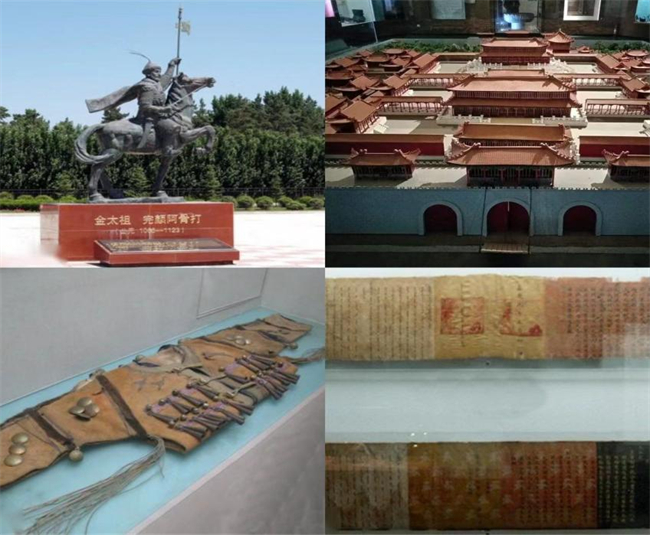
金上京历史博物馆内、外景
Jin Dynasty History Museum from Inside and Outside
(5)东北虎林园
Northeast (Siberian) Tiger Park
1986年,中国横道河子猫科动物饲养繁育中心成立,是我国最早的东北虎保护机构,从此开始了长达30多年的人工饲养繁育和科研保护东北虎之路。1996年,为更好的保护这些东北虎,“中心”在哈尔滨市建立黑龙江东北虎林园,通过开发利用东北虎的旅游观赏价值,用“以虎养虎”的方式,支持保护、科研和野化训练工作。目前,该园是世界上最大的人工饲养和繁育东北虎基地,也是国家4A级旅游景区。占地面积144万平方米,拥有各种不同年龄的纯种东北虎1300余只,是真正的“千虎之园”。每年累计接待游客40万人次,曾成功接待习近平、胡锦涛等国家重要领导人和国内外重要来宾数千人次。景区目前可观赏到白虎、雪虎、白狮、狮虎兽、猎豹、花豹、金钱豹、非洲狮、孟加拉虎、黑色美洲虎、美洲狮等珍稀动物。
In 1986, the China Hengdaohezi Feline Breeding Center, the first Siberian tiger protection agency in China, was established. And China has since begun its over 30-year breeding, R&D and protection of Siberian tiger under captive condition. In 1996, the Center established the Heilongjiang Siberian Tiger Park in Harbin to better protect these tigers. The income generated by tourists’ visits can be used for tiger protection, R&D, and rewilding training. The park is currently the world’s largest breeding base for captive Siberian tigers, and a national 4A tourist attraction. It covers an area of 1.44 million square meters, with over 1,300 purebred Siberian tigers of various ages. It is literally a “park of a thousand tigers”. Each year, people make over 400,000 visits to this park. Thousands of important guests from home and abroad, China’s top leaders Xi Jinping, Hu Jintao included, paid visits to the park. You can see rare animals such as white tigers, snow tigers, white lions, ligers, cheetahs, panthera pardus, leopards, African lions, Bengal tigers, jaguars and pumas.
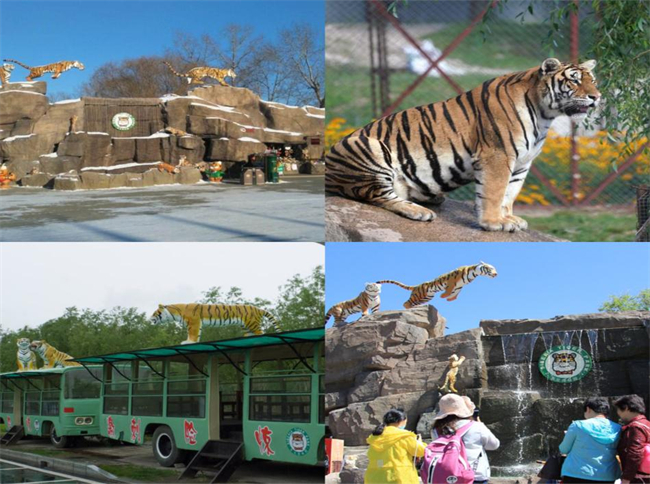
东北虎林园内、外景
Northeast (Siberian) Tiger Park from Inside and Outside