Visiting places of interest in Shandong, getting know about Chinese culture
“儒舟揽胜 礼阅华夏”夏令营
Location 院校所在地
Shandong山东
Delegation Type 团组类型
Summer Camp夏令营
Theme 行程主题
Cultural Features 文化特色
Language 服务语言
Chinese / English中文、英语
Perferred period 优选时段
March-April 3月-4月
Reception 接待规模
51-100 People51-100 人
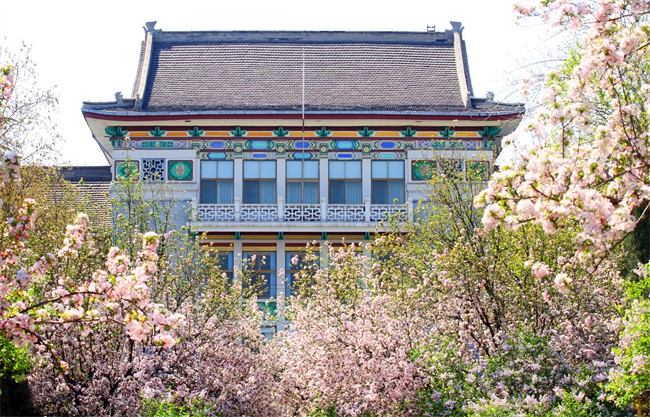
Shandong Normal University (SDNU) , the provincial key institution of higher education , is among the first batch of universities designated by Ministry of Education of China admitting Chinese Government Scholarship student, International Chinese Teachers’ Scholarship student (originally Confucius Institute Scholarship student) and Shandong Provincial Government Scholarship student. Since the year of 1983 when SDNU began to enroll international students, university has cultivated more than 20,000 short-term and long-term international students from nearly 70 countries and regions. As the Chinese language education base of Shandong Province, SDNU has successfully accepted several overseas Chinese language education short-term delegations.
Splendid Han clothing(Hanfu experience) 锦绣华服(汉服体验)
第8天
Unlimited Communication (Chinese Communication) 沟通无限(交际汉语)
Unlimited Communication (Chinese Communication) 沟通无限(交际汉语)
Ink rubbing art (rubbing experience) 墨拓艺术(拓片体验)
第9天
The Five Sacred Sacred Mountains (Dong Yue Mount Tai) 五岳至尊(东岳泰山)
第10天
Taishan Tofu Museum 泰山豆腐博物馆
Taishan shadow puppet 泰山皮影
第11天
Free Chinese(Travel Chinese) 中文畅行(旅游汉语)
Free Chinese(Travel Chinese) 中文畅行(旅游汉语)
Learning Kung Fu(Tai Chi Kung Fu fan) 武动乾坤(太极功夫扇)
第12天
Chinese Character Paradise 汉字乐园
Chinese Character Paradise 汉字乐园
Calligraphy and Fragrance (Chinese Calligraphy) 翰墨飘香(中国书法)
第13天
Free Chinese(Travel Chinese) 中文畅行(旅游汉语)
Final Exam 结业考试
Closing Ceremony 结业仪式
第14天
Airport Delivery 退房、回国、送行
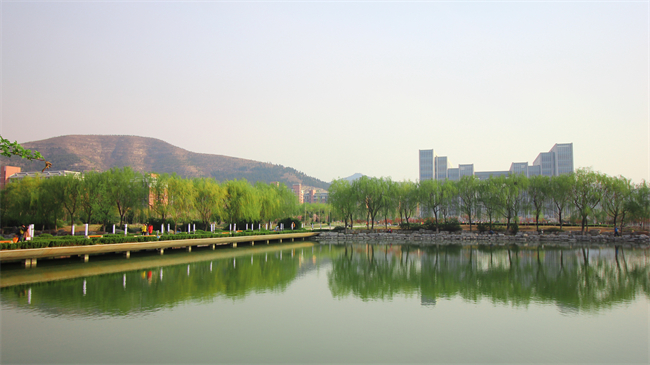
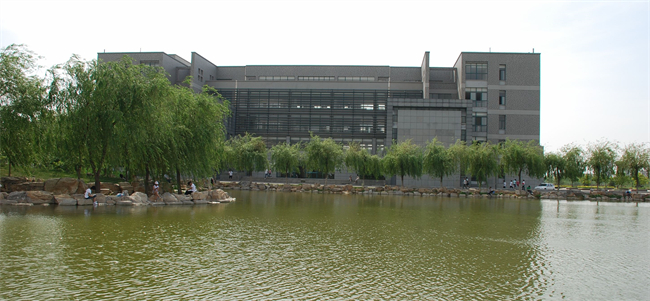
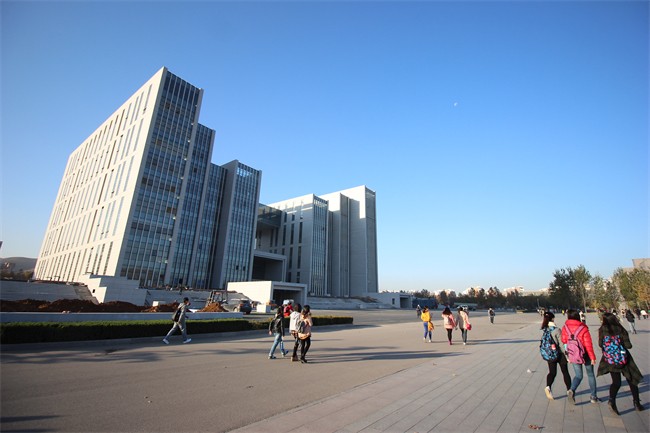
SDNU has two campuses in Lixia District and Changqing District which cover a land area of about 257 hectares and a building area of 2,560,000 square meters. It has established 46 research and training institutions in national level and above provincial and ministerial level, SDNU contains 21 schools, 67 undergraduate programs, 13 post-doctoral research stations, 15 first-level disciplines for doctorate degree granting, 34 first-level disciplines for master’s degree granting and 19 types of professional degree authorization which cover the top ten subjects and disciplines. It ranks as the top of all provincial colleges and universities in the amount of subjects and disciplines. The library has a collection of 3,469,400 volumes of books and periodicals, a collection of 1,416,700 volumes of electronic books as well as 193 databases.
College of International Education (International Students’ Office)of Shandong Normal University (CIE/SDNU hereafter) is a teaching-and-administrative-oriented unit which mainly aims at accepting and training international students. CIE/SDNU is well-known for the teaching quality. CIE has a team of excellent teachers with reasonable talent echelon. They are dedicated to the teaching career and offer quality teaching with abundant scientific attainments. There are 33 full-time teachers giving Chinese language courses to the international students, among whom are 5 professors, 10 associate professors. Most of the full-time teachers have been teaching Chinese as a second language for many years and have the experience of teaching Chinese abroad. Dozens of countries have witnessed their teaching experiences, such as Korea, Japan, USA, Germany, Romania, Bulgaria, Sudan, UK, Egypt and Burma. All the experiences have enabled them to accumulate rich experience in teaching Chinese as a second language.
One of the three famous scenic spots in Jinan, it is located in Lixia District, Jinan City, Shandong Province. It faces Quancheng Square in the east and Wulong Pool in the north. It covers an area of 158 mu and ranks among the 72 famous springs in Jinan. When Emperor Qianlong was on his southern tour, Baotu Spring was canonized as "the first spring in the world" because of its mellow and delicious tea. It is also the first famous spring in Jinan to be found in ancient documents.
One of the three famous scenic spots in Jinan, it was called Lishan in ancient times. Because it was said that Shun cultivated fields in Lishan, it was also called Shunshan and Shungengshan. During the reign of Emperor Kaihuang of Sui Dynasty (581-600 years), because of the prevalence of Buddhism, thousands of Buddha statues were carved along the mountain, so it was called Qianfoshan. Qianfoshan showcases the Buddhist art of the Sui Dynasty in China, with a long history and culture.
It is one of the three historical sites of Jinan City Lake and Jinan in Shandong Province. Located in the north of the old city of Lixia District, Jinan City, Shandong Province, it is formed by the confluence of many springs in Jinan. The lake water flows into the Xiaoqing River through the Lushui River. The water surface area is 57.7 hectares, and the average water depth is 2 to 3 meters. Daming Lake has beautiful scenery and clear water. It is one of the core components of the national 5A-level tourist attraction - the first spring scenic area in the world.
Qufu Confucius Mansion, Confucius Temple and Confucius Forest are collectively referred to as "Three Confucius". Confucius Temple is a temple dedicated to Confucius and a classical architectural complex that is more representative of Confucian culture. Confucius Forest is a special cemetery for Confucius and his family. The family cemetery with the largest scale, the longest delay, the most tombs and the most complete preservation.
Nishan was formerly known as Niqiu Mountain. Confucius' parents "prayed to Niqiu to get Confucius", so Confucius' name was Qiu Zhongni, and later generations avoided Confucius and called it Nishan. A generation of sage Confucius was born here. It is located 30 kilometers southeast of Qufu City. At an altitude of more than 340 meters, there are five peaks on the top of the mountain, but the middle peak is Niqiu.
Rubbing is an ancient traditional skill in my country. It is a skill to copy words and patterns such as inscriptions, stone carvings, oracle bones, bronze wares, etc. using rice paper and ink. It is one of the important carriers for recording the long history and traditional culture. A fascinating intangible cultural heritage.
Making tofu is one of the intangible cultural heritages in Tai'an. Learn about the production process of tofu and feel the charm of intangible cultural heritage.
制作豆腐是泰安非遗之一,了解豆腐的制作过程,感受非遗魅力。
(8)泰山皮影Taishan shadow puppet
Taishan shadow play is an ancient traditional folk art. Listening to its singing and watching its shape, all reveal the profoundness and simplicity of Taishan culture.
泰山皮影戏是一种古老的传统民间艺术。听其唱,观其形,无一不透着泰山文化的深厚、古朴。
(9)武动乾坤(太极功夫扇)Learning Kung Fu(Tai Chi Kung Fu fan)
Tai Chi Kung Fu Fan absorbs the essence of traditional Chinese martial arts, blends Tai Chi movements with different styles of martial arts movements, and flexibly combines fan waving with Tai Chi sports skills.
Intangible cultural heritage on the tip of the tongue
Jiaodong flower pastry has a history of more than 300 years. It is an artistic style created by Jiaodong women according to living customs, festivals and regional characteristics, using flour as the main raw material. It has a special status in folk activities and means auspiciousness. , with distinctive artistic characteristics and life taste, carrying good wishes and wishes such as peace and health, good luck, wealth and longevity, abundant crops, and happiness.
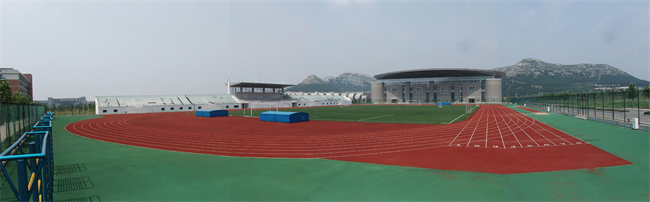
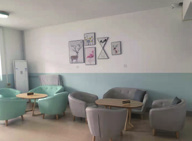
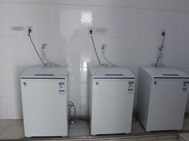
International students dormitory is located on the Lixia Campus ( in the downtown of Jinan) with several super markets, shopping malls, hospitals, etc. all around. SDNU has indoor and outdoor basketball courts, football fields, tennis courts, swimming pools, etc. The international student dormitory features bathroom, TV set, telephone, desk, wardrobe, 24-hour hot water and internet interface. There are communal kitchens, laundry rooms, one dining hall gym and so on in the dormitory building. International students can cook in the communal kitchen or buy food in the dining hall.